Which Frying Pan for Which Job? Building a Cookware Collection That Actually Works
Not every frying pan is made for every job. The pan that struggles with tonight’s dinner might be perfectly good, just better suited to something else. So, what’s the best frying pan for steak, eggs, delicate fish or a pan sauce?
We’ll leave the deep dive into construction and care to our cookware materials guide. Here, we’re getting practical: which material handles which job best, how many pans are enough for a working kitchen, and when a new pan fills a gap rather than joining the cupboard full of things you already own.
TABLE OF CONTENTS
- At a Glance — Which Pan for Which Job?
- Searing and High Heat: Stainless Steel or Cast Iron
- Eggs, Delicate Food and Low-Oil Cooking: Non-Stick
- Acidic Sauces and Everyday Versatility: Stainless Steel
- How Many Pans Do You Actually Need?
- Full Comparison: Frying Pan Materials by Job
- Which Should You Buy? Quick Decision Guide
- Frequently Asked Questions
At a Glance: Which Pan for Which Job?
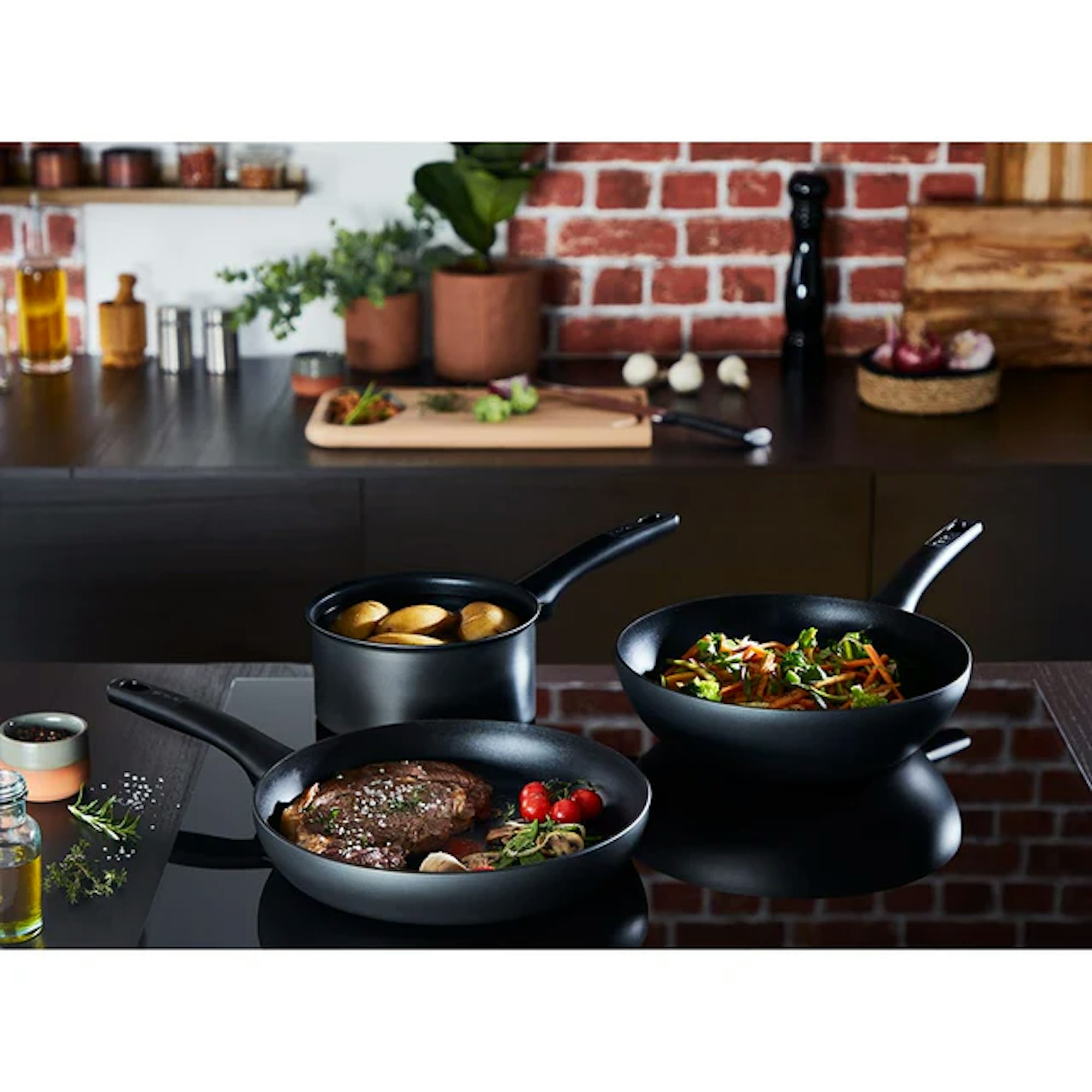
Non-stick is the easy choice for eggs and other delicate foods, while stainless steel and cast iron take over for anything that calls for higher heat. Here’s how it breaks down job by job:
- Searing steak or browning meat: best pan is stainless steel or cast iron.
- Why: handles high heat without breaking down and develops a proper crust.
- Eggs, pancakes, delicate fish: best pan is non-stick.
- Why: minimal oil, food releases cleanly at lower heat.
- Acidic sauces (tomato, wine reductions): best pan is stainless steel.
- Why: non-reactive, so acidic ingredients won't affect the cooking surface or take on a metallic flavour.
- Braising, oven-to-stovetop dishes: best pan is cast iron.
- Why: retains heat evenly at low settings, and most models are oven-safe.
Searing and High Heat: Stainless Steel or Cast Iron
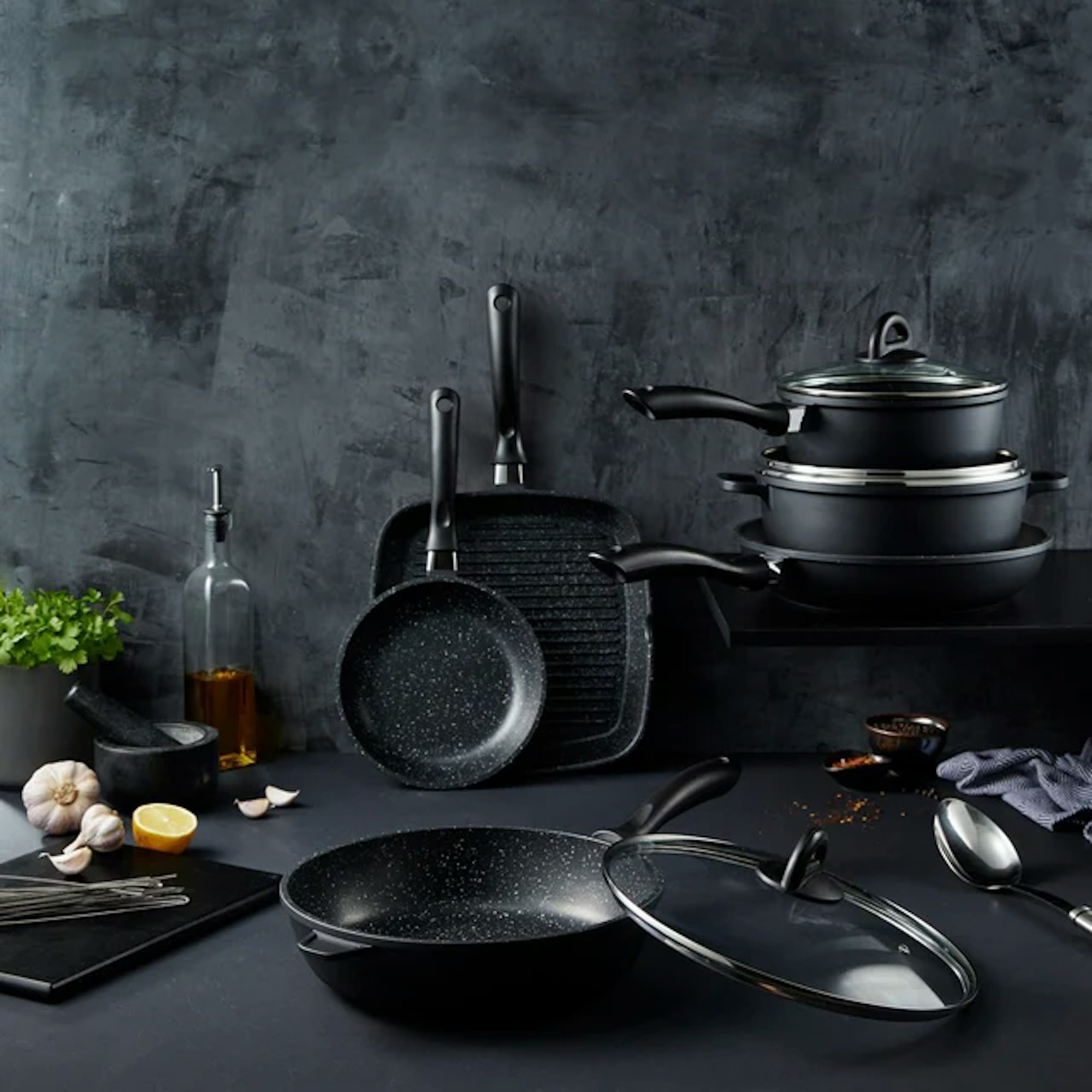
For searing steak and browning meat, choose stainless steel or cast iron. Both can handle the higher temperatures needed to develop a well-browned crust, while non-stick is better saved for lower-heat jobs. CHOICE specifically recommends stainless steel or cast iron when searing meat at high temperatures.
A stainless steel pan for cooking steak also gives you something useful once the meat comes out: you can deglaze the browned bits left behind to make a pan sauce. House's Baccarat iconiX range is a solid stainless steel option here, with a 5mm impact-bonded base, induction compatibility and oven-safe construction up to 220°C.
Cast iron takes longer to heat but holds onto that heat particularly well. It's an excellent choice for searing, braising and dishes that move from the cooktop into the oven. ABC's cookware guidance also highlights cast iron's heat retention and suitability for searing followed by slower cooking.
Compare House's stainless steel cookware, or browse cast iron frypans and skillets, including GRYLT and Lodge.
Eggs, Delicate Food and Low-Oil Cooking: Non-Stick
For eggs, pancakes and delicate fish, non-stick is usually the easiest pan to reach for. Food releases cleanly with minimal oil. That makes a non-stick pan a useful partner for omelettes, pancakes, and other foods prone to sticking.
Just keep the heat moderate. CHOICE notes that traditional PTFE coatings can begin to break down above 260°C, so save the hard sear on steak or other meat for stainless steel or cast iron, and let non-stick do the job it's actually built for.
Non-stick pans do wear out eventually, and it’s easy to tell when. If the food starts sticking, the base warps, or the coating scratches or chips and bare metal shows, it may be time to replace your non-stick pan.
House's non-stick range includes Baccarat STONE, STONEX2, Nook and Granite, along with Bessemer and Tefal. For everyday maintenance, see our guide to cleaning a non-stick pan safely.
Acidic Sauces and Everyday Versatility: Stainless Steel
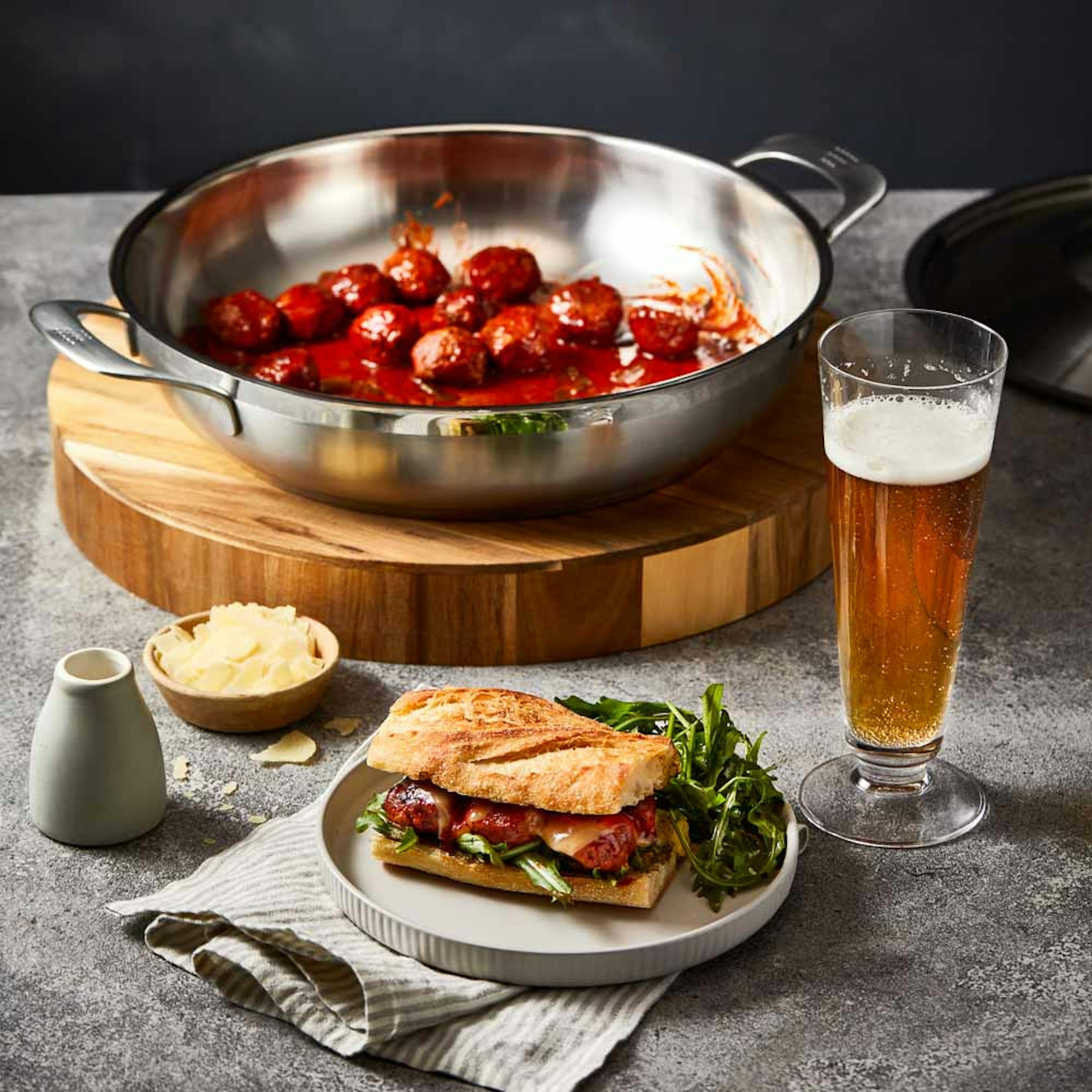
For tomato-based sauces, wine reductions and deglazing, stainless steel is the better choice. It’s non-reactive, so acidic ingredients won’t damage the cooking surface or pick up the metallic flavours that can occur when cooking acidic foods in traditional, unseasoned cast iron.
Stainless steel is also the pan to reach for when you want those browned bits left behind after searing meat or vegetables. Known as fond, they can be loosened with wine, stock or another liquid to build the base of a pan sauce. In this case, a little sticking is actually useful. A non-stick surface works against you because it prevents those browned bits from forming as readily.
Within the House range, Baccarat iconiX’s 5mm impact-bonded base spreads heat evenly across the pan. That gives you better control while searing, so your fond can brown without scorching before you get to deglazing and turn it into a sauce without changing pans.
How Many Pans Do You Actually Need?
For most home cooks, two frying pans cover most everyday cooking. Rather than looking for the best frying pan material, it makes more sense to choose two pans that do different jobs well.
Start with a stainless steel or cast iron pan for searing and browning, then add a non-stick pan for eggs, pancakes and delicate foods. If you regularly make pan sauces or cook with acidic ingredients, stainless steel has an advantage over traditional cast iron because it’s non-reactive.
A third pan is worth considering when it fills a genuine gap. That might be a larger cast iron pan for batch cooking and braising, or a smaller non-stick pan for quick meals and single portions.
Still deciding between stainless steel and cast iron? Our cookware materials guide breaks down the differences. And if you’re weighing up individual pieces against a matching set, see how to choose a cookware set before filling the cupboard with pans you may not use.
Full Comparison: Frying Pan Materials by Job
No frying pan material is best at everything. Stainless steel, non-stick and cast iron each have jobs they handle particularly well, along with a few situations where another pan makes more sense.
Stainless steel
Best for searing, sauces and everyday acidic cooking. Not ideal for very delicate foods without the right technique.
- Heat ceiling is high; House's Baccarat iconiX range is oven-safe up to 220°C.
- Safe with acidic food, since stainless steel is non-reactive.
Care effort: hand-wash to preserve shine.
Non-stick
Best for eggs, pancakes, delicate fish and low-oil cooking. Not ideal for high-heat searing.
- Heat ceiling requires care; traditional PTFE coatings can begin to break down above 260°C.
- Safe with acidic food only when the coating is intact.
Care effort: hand-wash and use only wooden, plastic or silicone utensils.
Cast iron
Best for searing, braising and long slow cooking. Not ideal for acidic sauces in traditional, unseasoned cast iron.
- Handles high heat well, though it's worth checking the individual pan's specifications.
- Safe with acidic food only if enamelled or well-seasoned.
Care effort: hand-wash and dry immediately, and season traditional cast iron regularly.
CHOICE recommends stainless steel or cast iron over non-stick for high-temperature searing, while ABC notes that stainless steel is non-reactive and traditional cast iron needs more care around acidic foods.
Which Should You Buy? Quick Decision Guide
The right frying pan depends on what you cook most often, not what's on sale or what looks nice in a set. If you’re filling a gap in your cupboard, start with the job your current pans aren’t doing well.
- Mostly eggs, pancakes and delicate fish? Choose non-stick for easy food release and lower-heat cooking.
- Sear steak, brown meat or make pan sauces? Choose stainless steel. The Baccarat iconiX Frypan range is a strong option for high-heat cooking, deglazing and acidic ingredients.
- Love searing, braising and slow cooking? Cast iron is worth the extra weight and care for its heat retention.
- Starting from scratch? Begin with two pans: one non-stick and one stainless steel or cast iron. That combination will cover most everyday cooking.
Browse House’s frying pan collection to compare options across materials, sizes and brands. If cast iron fills the missing spot in your kitchen, see the cast iron frypans and skillets range.
Frequently Asked Questions
Is it better to have one frying pan or several?
For most home cooks, two frying pans are enough: one for delicate, lower-heat cooking and another for searing, browning and other higher-heat jobs.
What frying pan is best for searing steak?
Stainless steel or cast iron is best for searing steak because both can handle the high heat needed to brown it. A stainless steel pan for cooking steak also makes it easy to deglaze afterwards for a pan sauce.
Can you cook eggs in a stainless steel pan?
Yes, you can cook eggs in stainless steel, but temperature control and enough fat are important to prevent sticking. For easier release, non-stick is usually the simpler choice.
Why does food stick to my non-stick pan?
Food may start sticking when the non-stick surface is worn or damaged. If sticking continues, or you notice warping, scratches or chipped coating with bare metal showing, it may be time to replace your non-stick pan.
Is cast iron or stainless steel better for everyday cooking?
Stainless steel is generally more practical for everyday cooking, particularly if you cook acidic foods or pan sauces. Cast iron is especially useful for searing, braising and heat retention.
Back to blog