Home Bar Essentials: The Pieces That Complete Your At-Home Cocktail Bar
A home bar starts with three things: glasses, tools and something to decant into. Building around these three categories gives you the essentials for mixing, serving and entertaining without ending up with a cupboard full of barware that rarely gets used.
Many bar corners remain incomplete and mismatched because people buy home bar items piece by piece from different places at different times: a shaker in March, a couple of glasses in July, and come December celebrations, you find yourself stirring a Negroni with an ordinary kitchen teaspoon.
The aim is to match your home bar setup to the way you actually entertain, rather than zeroing in on one “must-have” piece. The three tiers below bring together the essentials across glassware, bar tools and decanting, giving you a starting point for building a setup around your space, budget and hosting habits.
- At a Glance: What a Home Bar Needs
- The Right Glasses for the Drinks You Make
- The Tools That Make the Drink
- Decanters, Ice and the Finishing Pieces
- Building the Basket: Starter, Complete and Premium
- Frequently Asked Questions
At a Glance: What a Home Bar Needs
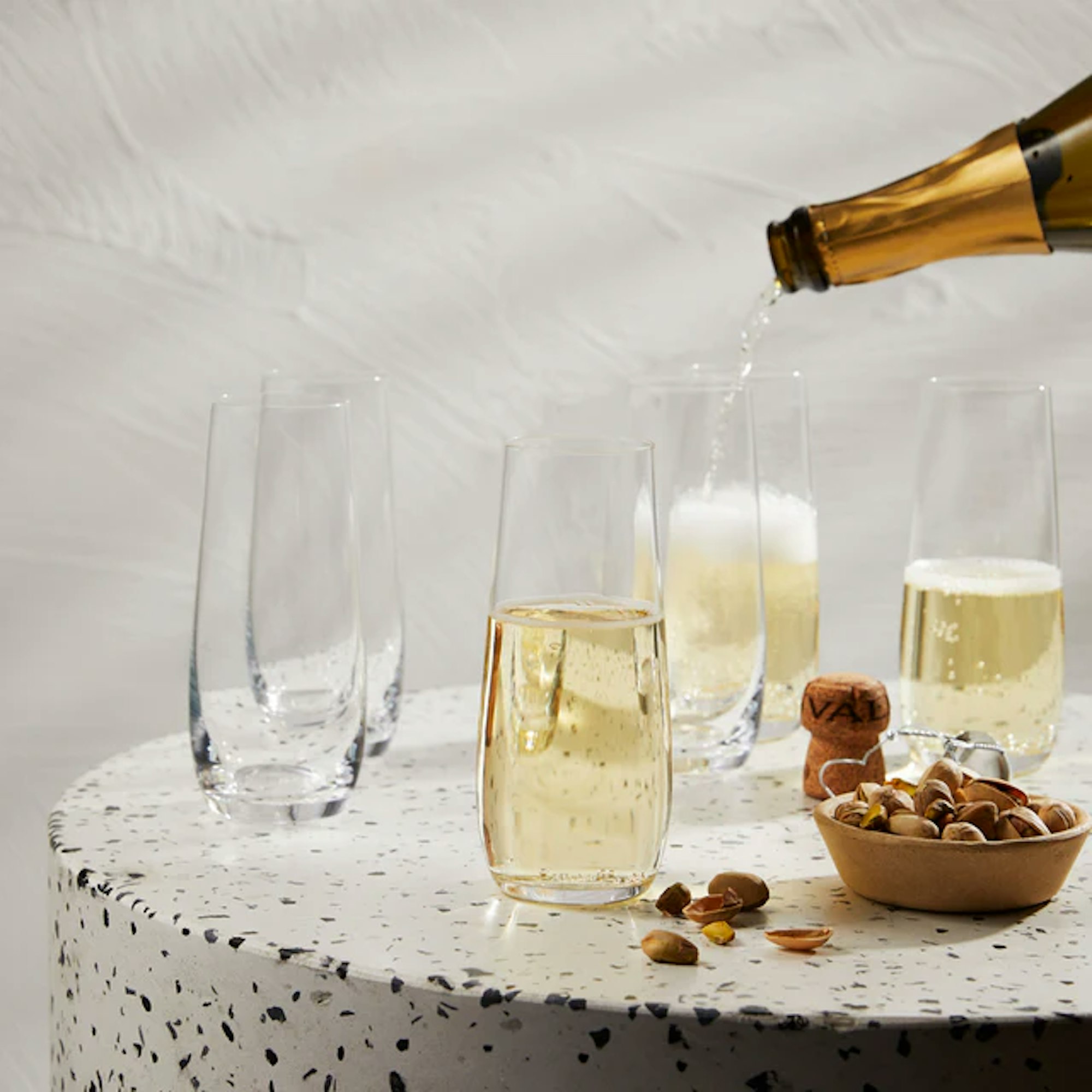
To have a working bar, you need three things: glasses to serve in, tools to mix with, and something to decant into once you own more than a couple of bottles.
If you want to cut to the chase and get a preview of a quick list up front, take a look below. Just pick the tier that matches how often you actually pour.
Starter
- Best for: first-time hosts and occasional cocktails
- What’s included: shaker, jigger and coupe glasses (set of 4)
- Number of products: 3
Complete
- Best for: regular hosting for more than one drink style
- What’s included: 7-piece bar tool set, coupe and rocks glasses, and a decanter
- Number of products: 4
Premium
- Best for: a dedicated bar corner that’s also gift-worthy
- What’s included: 7-piece bar tool set, crystal coupe glasses, and a crystal decanter and tumbler set
- Number of products: 3
What may surprise you is that the number of products barely changes between the three tiers. The main differences are whether the tools are sold as part of a single set and whether decanting is part of the package.
The Right Glasses for the Drinks You Make
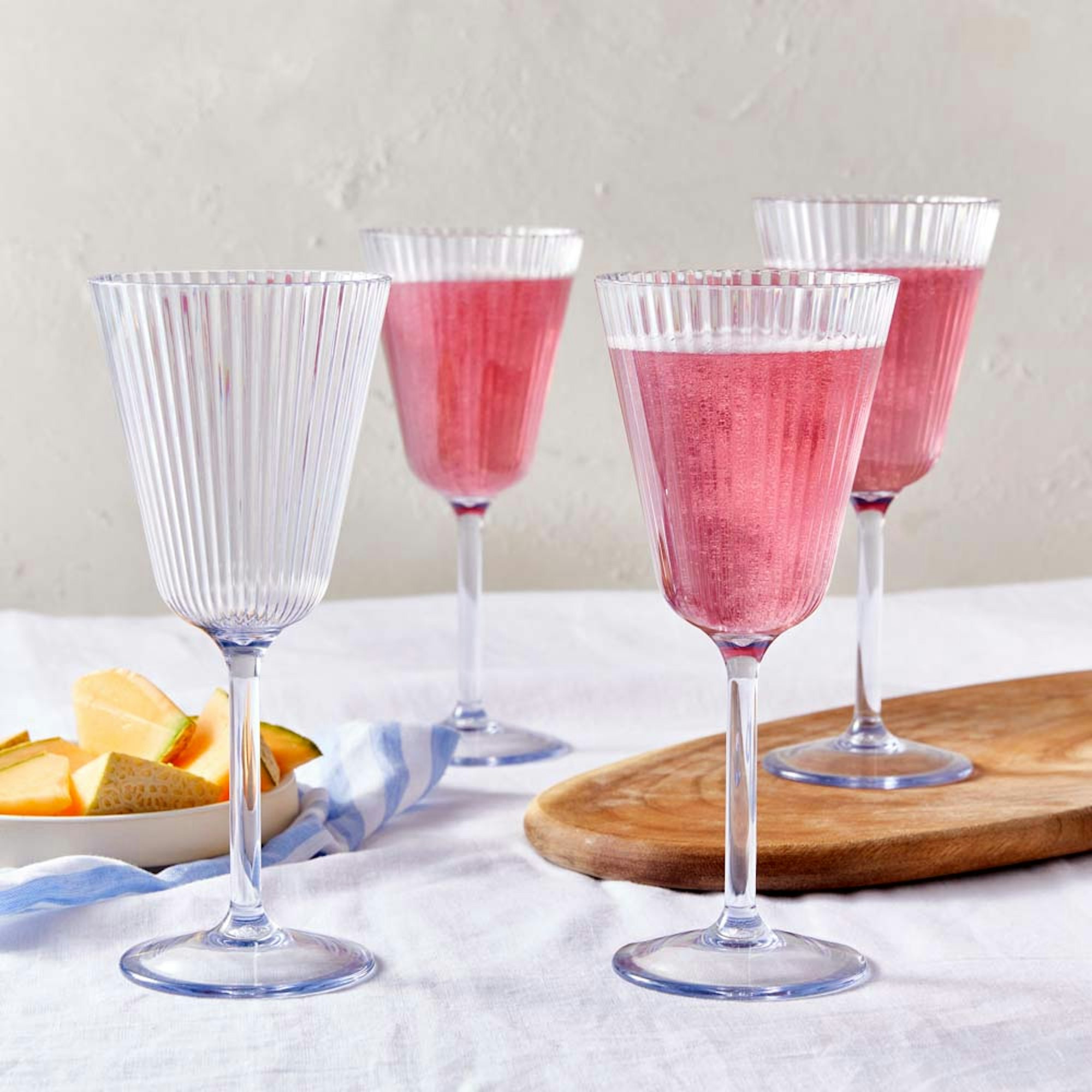
A home bar can cover most cocktails with two core glass shapes: coupes for drinks served without ice and rocks glasses for spirit-forward drinks served over ice. A set of four is the realistic minimum for a home bar, even if you only need enough to serve two.
Coupe Glasses
Coupe glasses have a shallow, wide bowl that suits anything shaken or stirred and served without ice, including a daiquiri, a martini, and most of the drinks people ask for by name.
Rock Glasses
Rock glasses, also called old-fashioned glasses, are made for drinks served over ice. Their shorter, wider shape suits spirit-forward cocktails and neat pours, and they generally hold around 240 to 350 ml.
Other Cocktail Glasses
Martini glasses and highballs can fill more specific gaps as your home bar grows. Martini or cocktail glasses typically hold around 150 to 250 ml, while highballs are taller and generally hold around 300 to 450 ml, making them better suited to longer drinks with mixers.
Whiskey glasses are another useful category for neat pours. Their heavier base and shaped bowl are designed for sipping spirits without a mixer, particularly when aroma is part of the experience. They also keep the temperature in check.
Choosing Glassware for Your Home Bar
If you’re starting from scratch, four matching glasses in a shape you’ll actually use will take you a long way. Once you’re regularly making drinks that call for something different, throw in another shape. There’s no use trying to build the entire barware aisle at once.
There’s one other decision to make before filling the cupboard: how much glassware care are you willing to sign up for? Everyday glasses from brands such as Tempa, Alex Liddy, Cellar and Luigi Bormioli are dishwasher safe, making them easier to get through after a few rounds of drinks. Premium crystal from brands like Riedel, Nachtmann, Spiegelau and Waterford is always best hand-washed to protect clarity and thin rims.
If the dishwasher is getting the call after guests leave, browse the cocktail glass range with this in mind.
The Tools That Make the Drink
Just four tools are needed to make almost every cocktail you can think of: a cocktail shaker, a jigger, a strainer and a muddler. You can buy them one at a time to spread the cost, or take the lot as a set if you prefer to order all at once.
Cellar has stainless steel cocktail shakers that make a solid starting point, while Alex Liddy offers double jiggers with 15 ml and 30 ml measures. This pair alone will get you beautifully through a Friday night, and you can add a strainer and muddler later as your confidence in drink-making grows.
If you’d rather not assemble your tools piece by piece, Cellar also has bar tool sets that bring the main pieces together in one purchase. Depending on the set, that can include a shaker, strainer, double jigger, stirring spoon, ice tongs and muddler, with a stand to keep everything together on the bench. Do bear in mind that some sets need hand washing in warm water, then drying with a soft, lint-free cloth to keep the finish looking its best.
Decanters, Ice and the Finishing Pieces
A decanter makes a shelf of bottles look like an upmarket bar corner. And as well as its luxe appearance, it scores high points by way of function. Red wine gets aerated in a decanter, which enhances its flavour and separates its sediment. A spirit gets a more aesthetically pleasing home than the bottle it came in, and its quality is preserved with a decanter’s airtight seal.
Alex Liddy has everyday decanter options in lead-free European crystal, including dishwasher-safe designs, while Nachtmann sits at the more premium end with German lead-free crystal decanters and matching glassware. So there’s room to keep things practical or make the decanter part of the display.
Ice buckets belong in the same barware range and are elegant and useful, especially when you’re pouring for more than two. It saves you from running to the freezer between rounds, which gets tedious. Bottle stoppers, hip flasks and coasters are finishing touches that are useful but not essential. For more options, see the decanters and carafes collection, which includes quality brands like Plumm, Royal Doulton, Nachtmann and Alex Liddy.
Building the Basket: Starter, Complete and Premium
Each section below is a finished setup, so you can order any one of the three and pour a proper drink the same night you get it.
Starter
- Bar tools: Cellar Tonic Stainless Steel Cocktail Shaker Silver and Alex Liddy Slate & Co Double Jigger Black
- Glassware: Salt & Pepper Winston Coupe Glasses 270mL, Set of 4
- Decanting: not included at this tier
- Best for: testing a hobby before spending more on extending your setup
Complete
- Bar tools: Cellar Premium Luxe Bar Tool 7 Piece Set
- Glassware: Salt & Pepper Winston Coupe Glasses 270mL and Old Fashioned Tumblers 355mL, Sets of 4
- Decanting: Alex Liddy Vina 1500ml Burgundy Decanter
- Best for: a host who wants to properly allow for both styles of drink.
Premium
- Bar tools: Cellar Premium Luxe Bar Tool 7 Piece Set
- Glassware: Orrefors crystal coupe glasses, Set of 4, 210mL
- Decanting: Nachtmann Noblesse 3 Piece Crystal Whisky Decanter & Tumbler Set
- Best for: a gift-worthy bar corner intended to impress
Most first-time hosts get more out of the Complete setup than the Premium one, so you don’t need to default to the top tier just because it’s there. A home bar setup you actually use, and that fits your budget and lifestyle, beats a better one that sits behind a cupboard door, waiting for an occasion that’s ‘special enough’.
Frequently Asked Questions
What do you need to start a home bar?
A shaker, a jigger and four matching glasses. This covers all the classic drinks, and everything beyond these is more a refinement than a necessity. Add a strainer and a muddler whenever you feel the need for them, which is typically around the third mojito in a row that you’re preparing.
Do you need different glasses for different cocktails?
You don’t need different glasses for every type of drink. That said, two shapes will have you covered for almost everything you pour. A coupe is great for anything served without ice, and a rocks glass handles spirit-forward drinks poured over ice. Martini glasses and highballs are good to add to your collection once you know which drinks you actually like to make regularly.
Is a decanter necessary for a home bar?
Not strictly. In fact, it’s the first thing to skip if your budget is tight. A decanter aerates red wine and gives a spirit a nicer home than the original bottle. In both cases, it’s pleasant and luxurious, but not essential to have. A decanter is the piece that makes a bar corner feel refined.
What is the cheapest way to build a home bar?
If your budget is tight, you may like to buy the tools individually over time rather than as a set. Start with one glass shape in a set of four. A shaker and jigger are for mixing, and the coupe glasses are for serving. Adding a strainer, a muddler and a second glass shape later spreads the cost over several months.
How much should a starter home bar cost?
Less than you may expect. The Starter basket contains three products: a shaker, a jigger and four coupe glasses. The cost comes in well under the price of a single crystal decanter-and-tumbler set. Look for barware for sale at House to get even better value.
Back to blog